Project Summary
The Three Mile Trail is a community-driven project that will close critical gaps in East Bay Township’s nonmotorized network, safely connecting neighborhoods, schools, businesses, and natural areas to the region’s 100+ mile trail system.
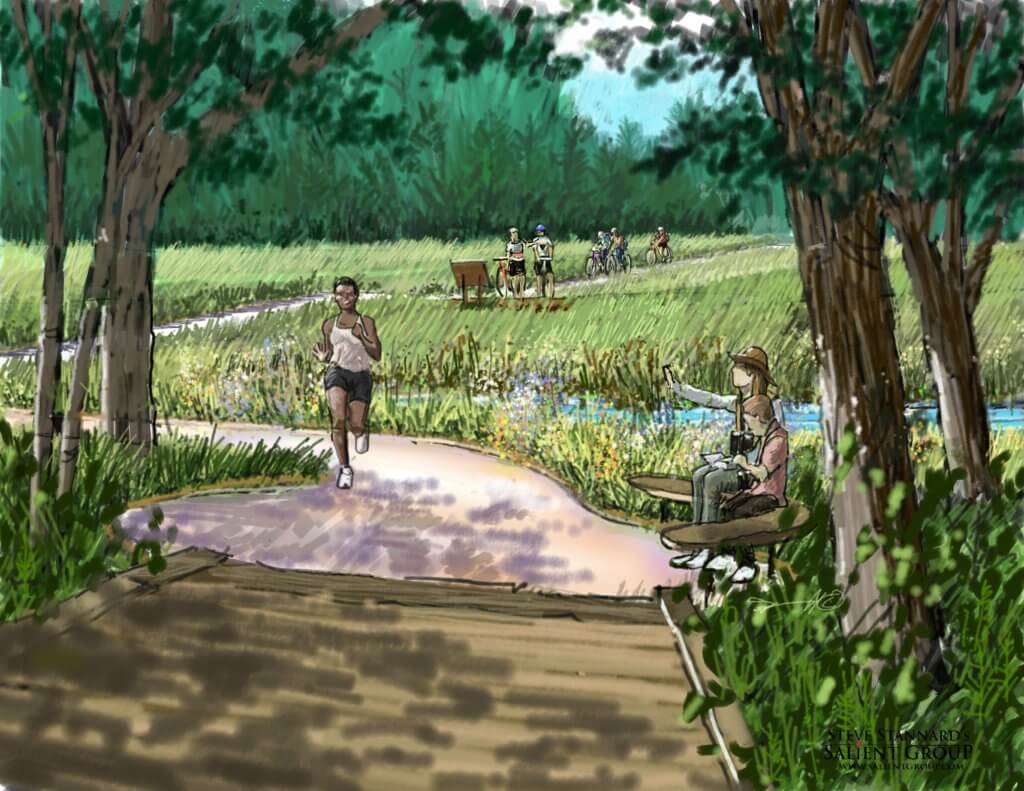
Building on the existing trail along Three Mile Road, the project will extend connections along the Three Mile–Hammond corridor and through Mitchell Creek Meadows: The Don and Jerry Oleson Nature Preserve. Once complete, the Three Mile Trail will provide equitable transportation options, Safe Routes to School access, and a scenic, year-round space for recreation, outdoor learning, and community connection; supporting a healthier, more connected greater Traverse region.

Goals
- Advance the vision of making every home a trailhead through the construction of a new trail corridor, directly connecting Mitchell Creek Meadows to the regional trail network
- Create an opportunity for over 4,000 students to bicycle and walk to school safely through the construction of new nonmotorized pathways
- Support the health, wellbeing and economic vibrancy of the Grand Traverse region for generations to come
Status
The Three Mile Trail is currently in the design engineering phase, building on conceptual planning completed between 2020 and 2021. Construction is anticipated to begin in 2026 with Safe Routes to School infrastructure, with phased implementation through 2029, alongside continued fundraising and public investment to support trail construction, signage, and long-term maintenance.